April 30, 2024
Benefits Of Becoming A Cosmetologist
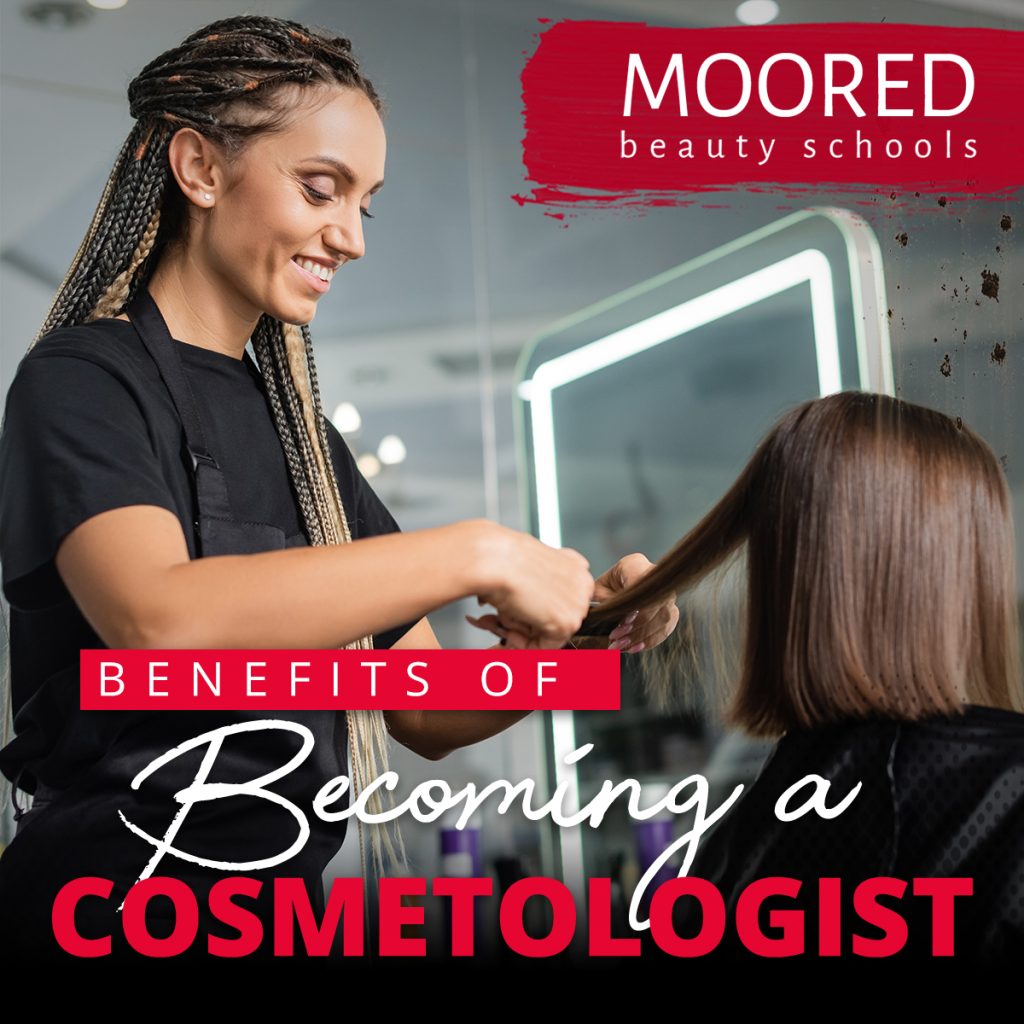
There are a lot of reasons people are drawn to cosmetology. You get to work with your hands, be creative, meet different people, keep learning, and explore different directions in the beauty industry as your interests grow. For someone who loves hair, beauty, and helping people feel good about the way they look, becoming a licensed cosmetologist can offer a mix of creativity and connection that’s hard to find in every line of work.
At Moored Beauty Schools, our Cosmetology program gives students the chance to build skills in hair, skincare, nails, client communication, salon management, and more while learning in a hands-on, salon-like environment.
1. How does cosmetology give you a creative outlet?
Creativity is one of the biggest reasons people fall in love with cosmetology. You’re working with color, shape, texture, style, and individual personalities, which means no two clients or services have to feel exactly the same.
Maybe hair color is what catches your attention. You might love thinking about how different shades work together or how a subtle change can completely shift a look. Maybe you’re more into cutting and styling, where you get to think about shape, movement, texture, and what works for the person sitting in front of you.
There’s room to explore different areas of beauty too. Cosmetology education can introduce you to:
- Hair cutting
- Hair coloring
- Hair styling
- Perming and relaxing
- Skincare
- Nail technology
- Makeup
You don’t have to know which one will be your favorite before you start school. Part of the fun can be discovering that as you learn. And because beauty trends keep changing, your creative work doesn’t have to stay the same forever.
2. What kinds of opportunities can a cosmetology license lead to?
A cosmetology license can give you several directions to explore, depending on your interests, experience, location, and any additional requirements for a specific role. Many licensed cosmetologists work behind the chair, but that’s only one possibility. Over time, you may find yourself interested in roles such as:
- Hair stylist
- Colorist
- Salon manager
- Salon owner
- Makeup artist
- Beauty product or salon sales consultant
- Brand educator
- Cosmetology instructor
Your interests may change once you’re actually working in beauty, and that’s okay. You may enter cosmetology school thinking you want to do one thing and discover another part of the industry that fits you even better.
For example, maybe you love working with clients for a few years and eventually become interested in running a salon. Or maybe you find yourself constantly helping newer coworkers and start wondering what teaching would be like. If education becomes part of your plan later, Moored Beauty Schools also offers a Cosmetology Instructor program for eligible licensed cosmetologists.
Your cosmetology license can be a foundation. What you build on top of it can change as you do.
3. Why are client relationships such a big part of cosmetology?
Cosmetology is a people-focused industry. You’re not only working with hair, nails, or beauty products. You’re working with the person sitting in your chair. That means listening matters.
A client might arrive knowing exactly what they want. Another might have a photo but no idea whether that look will work for their hair. Someone else may just know they’re ready for a change and need help figuring out what that change could be.
Learning how to ask the right questions, listen to someone’s preferences, and communicate clearly is a real part of being a cosmetologist.
Over time, you may also get to know clients beyond the service itself. They may come back for haircuts, color appointments, special events, or just because they enjoy sitting in your chair. You can end up being part of birthdays, school dances, weddings, job interviews, vacations, and all kinds of everyday moments in between.
If you’re someone who genuinely enjoys people, that connection can be one of the things that makes cosmetology feel special. It’s also why client communication is part of the Cosmetology curriculum at Moored Beauty Schools. Technical skills matter, but knowing how to work with people matters too.
4. Does cosmetology give you opportunities to keep learning?
Yes. Beauty is an industry where there’s always something else you can learn.
Think about how quickly hair trends, products, tools, color techniques, and styles can change. Even after you become licensed, you may decide to take classes, attend industry events, learn from brand educators, or spend extra time developing a specialty that interests you.
You might want to get deeper into:
- Hair color and corrective color
- Cutting techniques
- Texture and styling
- Extensions
- Salon business and management
- Product knowledge
- Client experience
- Education and mentoring
Continuing education can also keep things interesting. If you’re the kind of person who gets bored doing the exact same thing over and over, having new techniques and ideas to explore may be part of what keeps you excited about beauty.
Your first cosmetology class doesn’t have to be the last time you learn something new.
5. Can cosmetology lead to owning your own business?
For some cosmetologists, business ownership becomes a long-term goal. That could mean opening a salon, renting a salon suite, or building another beauty business that fits within licensing and local requirements.
Owning a business takes more than being good at beauty services. You also have to think about pricing, expenses, marketing, scheduling, customer service, supplies, recordkeeping, and the overall experience you want clients to have. That’s why it can be helpful to start learning some of those skills early.
At Moored Beauty Schools, the Cosmetology curriculum includes salon management and client communication along with hands-on beauty skills. You may not know yet whether you want to own a business someday, but understanding how the salon side works can still be useful.
As you gain experience, you can pay attention to the things you like about the salons and businesses around you. What makes clients feel welcome? How are appointments handled? What kind of atmosphere do you enjoy? What would you do differently if the business were yours?
6. Is there flexibility in cosmetology?
Cosmetology can offer different types of schedules and work environments, although the amount of flexibility you have depends on where and how you work.
Some cosmetologists work full-time salon schedules. Others work part time, evenings, weekends, or a mix of hours based on their employer or business. Salon owners and independent professionals may have more control over their schedules, but they also take on the responsibilities that come with running a business.
The important thing is that there isn’t only one version of what working in cosmetology has to look like.
You might enjoy the structure of an established salon. You might eventually want to manage a team. You may want to build your own client base. What feels right for you could also change as your life changes.
7. How can cosmetologists help clients feel good about themselves?
One of the most personal parts of cosmetology is getting to help someone leave your chair feeling good about their look. Sometimes it’s a big moment. Maybe you’re styling someone’s hair for prom, getting a client ready for a wedding, or helping them try something completely new. Other times, it’s just an ordinary Tuesday.
A fresh haircut, a color someone has been excited about, or simply having an hour where they can sit down and do something for themselves can mean a lot to a client. That human side of beauty is a big reason many people are drawn to the industry in the first place.
How do you know if cosmetology could be a good fit for you?
You don’t need to match one specific personality type to enjoy cosmetology. But there are a few things that may be signs it’s worth exploring.
Ask yourself:
- Do I like creative, hands-on work?
- Do I enjoy beauty, hair, color, makeup, or style?
- Do I like talking with and helping people?
- Am I open to practicing something until I get better at it?
- Do I enjoy learning new techniques?
- Would I like a job where I’m not sitting at a desk all day?
- Am I curious about different parts of the beauty industry?
You don’t have to answer yes to every single one. And you definitely don’t need to know your entire plan before you start looking into school.
If you’re curious, a campus tour can be a good way to get out of your head and see what cosmetology education actually looks like. You can walk through the school, see the learning environment, ask questions, and get a feel for whether you can picture yourself there. Talk with our Admissions & Enrollment team or schedule a tour at Moored Beauty Schools and bring your questions with you.
Frequently asked questions
Is cosmetology a good choice for creative people?
It can be. Cosmetology involves color, shape, texture, styling, and problem-solving, which gives creative people plenty of ways to use their interests while building technical beauty skills.
What can you do with a cosmetology license?
Depending on your experience, interests, location, and any additional requirements, licensed cosmetologists may explore work as hair stylists, colorists, salon professionals, salon managers or owners, beauty sales consultants, and cosmetology instructors after meeting additional licensing requirements.
Do cosmetologists have to keep learning after beauty school?
Beauty products, techniques, and trends continue to change, so many cosmetologists choose to keep learning through classes, events, manufacturer education, mentorship, and practice even after becoming licensed.
Can a cosmetologist own a salon?
Licensed cosmetologists may explore salon ownership, but opening and operating a salon can involve additional establishment, business, zoning, insurance, and local requirements depending on where the business is located.
What do students learn at Moored Beauty Schools?
Moored Beauty Schools Cosmetology students can learn hair cutting, coloring, styling, skincare, nail technology, salon management, client communication, anatomy and physiology, chemistry, and other cosmetology subjects in a hands-on learning environment.
Leave a Reply